Dramaturgy Papers
Dramaturgy Papers
Dramaturgy Papers

2026 winner, shortlist and longlist
Winner
One dramaturg was selected as winner for the dramaturgs' network's Established Dramaturg Award by our a panel comprised of Robert Awosusi, Sudha Bhuchar, Frey Kwa-Hawking and Réjane Collard-Walker.

Zoë Svendsen was selected by a judging panel comprising Sudha Bhuchar (founder of Bhuchar Boulevard, and co-founder of Tamasha), Réjane Collard-Walker (Deputy Head of New Work & Senior Dramaturg, Royal Shakespeare Company), Robert Awosusi (New Work Producer, Talawa Theatre) and Frey Kwa Hawking (Associate Dramaturg, Bush Theatre and d’n board member).
The judges selected Zoë from a strong shortlist of nominees who contribute to illuminating, refining and expanding the role of dramaturgical thinking in UK theatre and, between them, represent a breadth of form including new writing, participatory theatre, musicals, disability practices, and interdisciplinary performance.
The judges commented:
"We’re delighted to recognise Zoë’s far-reaching and cross-disciplinary practice and thinking. Her academic teaching and research stands alongside her innovative site-responsive and participatory storytelling, and her part in bold reworkings of early modern drama. At every point Zoë demystifies and deepens conversations and actions about the ongoing climate emergency for artists and organisations with distinctive collaborative generosity. Zoë’s work unites aesthetic and social concerns by being highly sensitive to contexts and politically attentive. Besides her roles at Cambridge Junction and HighTide, her book Theatre & Dramaturgy is a measured, welcoming route into considering dramaturgy as a field.
We admire how Zoë's dramaturgical process extends to all aspects of her practice; from the work she creates to the plays she supports, promoting ideas that try to radically imagine a better future with the resources we have now, as artists and as a society."
Shortlist
Six dramaturgs were shortlisted for the dramaturgs' network's Established Dramaturg Award (including the winner) by our panel, comprised of Robert Awosusi, Sudha Bhuchar, Frey Kwa-Hawking and Réjane Collard-Walker.

Pippa Hill, whose whole career, at the Royal Shakespeare Company and beyond, has been invaluable to the success of an astounding number of outstanding productions which captivate audiences internationally. We were particularly struck by her application of her discerning dramaturgical eye to a hugely broad range of projects across different scales, and her generosity in guiding and mentoring others.
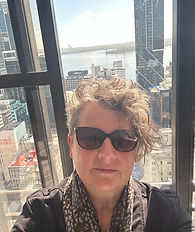
Kaite O’Reilly, whose trailblazing practice presents vital alternative dramaturgies which transcend the written world, challenging audiences and theatre-makers to interrogate their positions and beliefs. Informed by her D/deaf and disability-centred perspective, her influential body of work provokes ever more dedication to embedding the ‘aesthetics of access’ to engage audiences across theatre, dance, radio and opera.
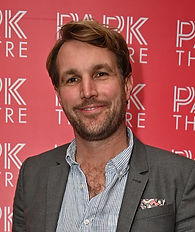
George Turvey, who as co-founder and now sole artistic director of Papatango, has made one of the most exceptional and consistent contributions to new writing in the last generation, shaping the playwriting ecology of this country for debut writers, young people, and in educational settings. His commitment to access of opportunity, his values, and patience impressed us hugely.

Neil Grutchfield, who energises us with his commitment to going above and beyond in his work to be a true collaborator, working imaginatively to find opportunities for writers beyond formal engagements and logistical limitations. Neil’s role with Synergy as New Writing Manager in particular, working with the talent of people with lived experience of the criminal justice system, opens up dramaturgical conversations with some of the society’s most marginalised in a holistic, rigorous manner matched by few.

Kate Golledge, whose dramaturgical care and audacity with musicals across scale and audiences was incredibly galvanising to us, and served as a strong reminder of how vital the role of dramaturg can be across mediums: her devotion to uplifting and strengthening the critical skills of her collaborators shines out.
Longlist
Thirty-one dramaturgs were nominated for the dramaturgs' network's Established Dramaturg Award by their peers.*
Although the judges came to a shortlist of six, they were keen to recognise the passion and gratitude expressed in every nomination for these dramaturgs who have contributed to the discipline and their collaborators in inventive, dedicated and generous ways. We've decided to celebrate all of the nominees here (in alphabetical order) along with the winner, Zoë Svendsen, and our five shortlisted dramaturgs, by publishing an anonymous quote from one of their nominations.
We encourage you to seek out their work!
*We disqualified Lee Anderson from consideration for the award for being a d’n board member (sorry Lee) but still want to celebrate his nomination.
Chris Campbell
Dramaturgs like him are now the connective tissue holding together the body of new writing in the UK.
Chris White
His generosity and devotion to dramaturgy and emerging writers is boundless - every time he works with a writer, he gives 110% and usually he will continue to work with writers outside of the paid remit of his job or attachment.
Frank Peschier
She reads like she's running out of time. She offers notes like yours is the most important play that's ever been written.
George Turvey
Many, myself included, would feel awkward calling ourselves writers without his exceptional contribution to British dramaturgy.
Gill Greer
She’s easygoing and approachable to pretty much anyone, except when a play needs fixing or fighting for: and then she’s unrelentingly all-in, but you don’t mind, because she’s on your team.
Guy Jones
I have found him to be clear, concise and insightful; asking all the right questions in order to inspire me to redraft and reshape my play to be the best it can be.
Kaite O’Reilly
At this time, I cannot think of a more innovative, radical or topical artist deserving of this award.
Kate Golledge
Beyond the individual project, Kate explains her thinking openly, which means writers don’t just fix one show but leave with a clearer sense of how to approach the next one.
Laura Kressly
Her adaptation of the practices of theatre criticism into a hybrid form of dramaturgy as embedded criticism sets her work apart and offers a valuable participatory methodology for others to learn from.
Lauretta Barrow
Her due diligence to support the beginnings of a writers career and champion them has led to them developing their first full length plays. She will give a scratch script the same attention as a full length play.
Lee Anderson
He listens for what is alive in a writer’s work and then asks the questions that help it surface.
Lisa McKinnon
Lisa is an unsung heroine of community arts; her focus is on helping people at the grass roots to develop the skills and appreciation of drama as writers and actors.
Louise Stephens
She gave me the tools to keep thinking and developing so that I could come back with a level of precision and perspicacity I don't know that I've achieved otherwise.
Matthew Jameson
To use dramaturgy to support new artists, allowing them to experience a warm welcome into the industry, and mentor them to think about how they use their voices in the future, is a legacy that will continue as they grow.
Melissa Dunne
Her experience as both a writer and director informs the breadth of her dramaturgy work, as well as having a strong academic underpinning, gained in her studies, but all the more as a staff member at CSSD for more than 10 years.
Micha Mirto
Whether she is working with the young queer community or others who have been through extreme life challenges, she brings warmth, compassion, depth, and a love for theatre as well as the skills and tools to ensure the best possible pieces of theatre emerge.
Mike Carter
Mike knows, loves, lives and breathes theatre and new writing and to be supported by him is to see the best in your work and the potential to take things further.
Nina Steiger
Her knowledge of the entire theatre ecosystem is vast, its roots go deep, and we are all flourishing from it.
Neil Grutchfield
During the pandemic, he swiftly adapted provision to ensure continuity by creating video correspondence courses for prisons, online courses for ex-prisoners, and launching the Lockdown Dramas competition in response to Covid-19. His commitment ensured that some of the most isolated people in society remained creatively connected.
Ola Animashawun
He is extraordinarily experienced and deserves all the recognition and accolades for his talent with new writing.
Penny Black
Not only has she assisted me practically with research and translations, but she has been a mentor and a teacher and her dramaturgical advice has shaped my writing to what I believe is the best it's ever been.
Pippa Hill
I was always amazed by her instinctive understanding of when in the process to approach any particular dramaturgical issue. Every meeting I had with Pippa ended with me wanting to return to the play and improve it.
Rob Watt
Rob's genius is locating the worlds in which spoken word and poetry can expand into character, staging, and nuance.
Rosie Wyatt
Her questions cut straight to solutions for me, in answering them I have progressed my next draft at a speed I could never have expected.
Sarah Dickenson
She combines structural precision with deep emotional intelligence, enabling bold, complex work to thrive and writers to do their best work.
Sharon Colpman
Throughout this process Sharon's major strength was her ability to give creative practitioners their head, allow them to make their own decisions, then offers appropriate advice at the appropriate time.
Shereen Jasmin Phillips
Working alongside her, I learned a great deal about the specific demands of community-based dramaturgy: how to shape complex, collective material; how to apply best practice in form and structure; and how to remain responsive to the lived experiences participants bring into the room.
Sinziana Cojocărescu
She was instrumental in the clarity of the narrative and the clarity in instructions given to the audience being led through actions.
Stef O’Driscoll
Her dramaturgy unlocked the central metaphor of the play, and it was a model of how to use the most truthful moments of a play to reimagine the elements that weren’t quite working.
Titania Krimpas
She is sensitive, devoted, encouraging, brave and tough when needs be. She is my go-to dramaturg and I have no hesitation recommending her to anyone who needs input.
Zoë Svendsen
Like all the best artists, Zoe’s work is always ahead of the curve: in content, form and technologically.
Established Dramaturg Award 2026
To kick off our 25th anniversary year, we are inviting nominations for the Established Dramaturg Award, to be awarded to one recipient in recognition of committed and generous practice, and an outstanding contribution to the field of dramaturgy.
The recipient will::
-
Be selected by a panel of industry professionals and artistic leaders (see below)
-
Recieve a £500 grant
-
Receive a complimentary annual d’n membership
-
Be supported to collaborate with the d'n on a live in-person event in Spring 2026 - open to members and non-members - to celebrate their achievement and foreground an aspect of their practice.
Details about the judging panel, rules for nomination and FAQs outlining the award criteria can be found below.
The Established Dramaturg Award builds on the success of the Kenneth Tynan Award, previously won by Gail Babb, Suzanne Bell and Ruth Little - among others. It is intended to raise awareness of the work carried out by dramaturgs in the UK – often overlooked or undervalued – and to inspire emerging dramaturgs with an expansive sense of possibility and creative courage.
In keeping with the collaborative nature of dramaturgical practice, we do not invite self-nominations. Theatre professionals engaged in any aspect of the theatre-making process are invited to nominate dramaturgs - such as colleagues, collaborators or those whose work they admire on-and-off stage - enhancing the atmosphere of peer recognition and cross-industry respect for the award-winner’s work.
The award will be judged by a panel of industry experts, alongside members of the d’n board.
Robert Awosusi is a director, writer, dramaturg and theatre maker creating work about people who are often unheard. His practice centres on performance exploring socio-political issues, with a focus on Blackness, queerness, capitalism and climate change. As a dramaturg, he has developed new work for companies such as Bullyache and Talawa and is a former Resident Director at the Almeida.
Sudha Bhuchar is an actor, playwright and founder of Bhuchar Boulevard, and co-founder of Tamasha. As a dramaturg, Sudha has supported artists including Tuyen Do, Nyla Levy and Dorcas Seb, and mentored artists including Julia Samuels and Imrana Mahmood. She is Artist in Residence at Theatre in the Mill and a trustee of Actors Touring Company, and has received multiple awards for her contribution to theatre, film and television.
Réjane Collard-Walker is a dramaturg, new-work producer and former Literary Manager with Royal Shakespeare Company. As a dramaturg, she has developed many RSC productions including Falkland Sound (2023), The Magicians Elephant (2021-22) and Tartuffe (2019). With a background in theatre translation and producing, Réjane has held positions at the Lyric Hammersmith and Old Vic Theatre, and now oversees new work contracting at the RSC.
Frey Kwa-Hawking is a dramaturg and critic who writes for Exeunt Magazine, The Stage, and WhatsOnStage. He has worked for the Unicorn Theatre, Young Vic, and the Royal Court. He was a writer and dramaturg on PaperGang Theatre’s Asian Pirate Musical, a queer science-fiction musical that had a concert performance at the Pleasance Theatre in 2024. He loves rehearsal rooms, new writing (especially queer work), and theatre that scares him or shakes his assumptions.
Rules for Nomination
-
The opening date for nominations is 12 PM on Monday 26 January 2026.
-
The closing date for nominations is 5 PM on Friday 27 February 2026.
-
The person you nominate must be a literary, movement or process-oriented dramaturg, working in any performance discipline, and residing in the UK.
-
We define 'process-oriented' dramaturgy as any combination of the following:
-
Collaborating with artists, companies and theatres to develop and document creative methods and processes.
-
Supporting individual artists in the development of new work on either a freelance basis or within an organisation.
-
Working closely with artistic leaders and creative teams to shape programmes, define artistic vision, and develop approaches for artist-development and audience engagement.
-
Fostering cross-disciplinary collaboration that connects academic research with performance practice and advances theatre scholarship and pedagogical approaches.
-
-
The person you nominate must have been practising for a minimum of 12 years.
-
Nominations can be made by a theatre practitioner only (anyone working paid or unpaid in live performance in the UK).
-
You can nominate one person only (not yourself).
-
Nominations can be made online via the google form.
-
Alternatively, nominations can also be submitted in audio or video format. If you opt for this approach, please ensure you include the following information:
- Your name and contact details
- Name of the nominee
- Description of a work that exemplifies the nominee's practice.
- Description of their broader contribution to dramaturgy and why they deserves this award.
-
Nominations via audio or video should not be longer than four minutes.
Click here to nominate someone for the Established Dramaturgs Award 2026
If you wish to submit your answers in a different format (e.g. Word document attachment with email), you can request a copy of the questions and email us your answers by getting in touch at info@dramaturgy.com.

Awarding panel
FAQs
Can I nominate myself? A. In the spirit of collaborative working and increasing the visibility of dramaturgy, we would like to encourage many different theatre makers to think about the value of dramaturgy, therefore we invite peer nominations. We will not consider self nominations.
Can I nominate someone who isn’t working in new writing? Yes. You can nominate a process-oriented dramaturg, movement dramaturg or a literary dramaturg. What we mean by process dramaturgy is dramaturgy for collaborative performance making and in the rehearsal room.
Are movement dramaturgs, and dramaturgs working in other genres included? A. Yes. Dramaturgs working in any genre or type of performance are included. This includes: New writing, Devised performance, Musicals, Dance, Physical theatre, Visual theatre, Circus, Storytelling, Puppetry. Clowning and more.
When will the shortlist be announced? The shortlist will be announced in early March (date tbc).
Can I nominate someone using a different format from text? Yes. You may nominate via a minute video or audio file. Send this to info@dramaturg.co.uk with subject tite 'EDA 2026 nomination'. Please ensure the video or audio application is no longer than 4 minutes total in length.
I work with someone who has been a dramaturg for less than ten years, can I nominate them? This award is specifically for dramaturgs who have been working professionally, for a minimum of 12 years. Later in 2026 we will open nominations for the emerging/mid-career Fellowship Award and invite you to nominate for less experienced dramaturgs then.
I’ve only worked with the dramaturg once: is that enough to be able to nominate them? Yes! As long as you can give an impression of how, in your experience, they meet the criteria of committed and generous practice and an outstanding contribution to the field of dramaturgy.
Do I need to be a member of the Dramaturgs Network to nominate someone? No. We welcome nominations from across theatre and movement work, from playwrights, directors, designers, etc.
Does the dramaturg I’d like to nominate have to be a member of Dramaturgs Network? No – but we hope they will consider joining!
The dramaturg I’d like to nominate works outside the UK, is that OK? This award is for dramaturgs who do the majority of their work in the UK. You can tell us us in the nomination form what the approximate ratio of the dramaturg’s work inside and outside the UK is. There is flexibility on this question for dramaturgs who work across the island of Ireland.
Can I nominate more than one dramaturg? We ask that you nominate just one dramaturg for this award.
Will the number of times a dramaturg is nominated affect the outcome? No. A dramaturg may be nominated by numerous people or just once. All nominees will be considered equally, and repeated nominations for the same individual will not affect the outcome either way.
Will there be a shortlist Yes. We will select and announce a shortlist of up to 5 nominnees, in addition to the selected winner.
The Established Dramaturg Award is currently the only award in the United Kingdom that is given to a dramaturg.
In recognition of the central role of dramaturgy to theatre and performance activity in the UK, we invite donations to help cover the costs of the award and the live event. We welcome donations big and small!